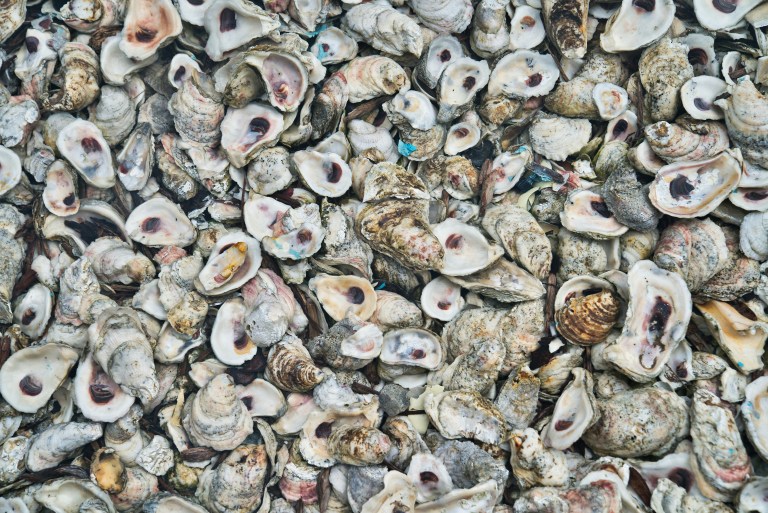
Use Your Five Senses to Assess Oyster Quality
Identifying dead oysters or mussels is crucial before cooking with them to ensure food safety and prevent the consumption of spoiled or potentially harmful seafood. Here’s how you can identify dead oysters or mussels:
- Sensory Inspection:
- Smell: Fresh oysters and mussels should have a clean, briny, and slightly oceanic smell. If they emit a foul or ammonia-like odour, it’s a sign that they might be dead or spoiled.
- Visual Inspection: Examine the shells for any visible cracks, holes, or chips, which could indicate a problem. Live oysters and mussels have tightly closed shells or shells that close when tapped. Dead or spoiled ones might have shells that are gaping open.
- Tap Test:
- Tap the shell of the oyster or mussel. Live ones will usually react by closing tightly. Dead or spoiled ones will remain open or may only partially close.
- Cooking Test:
- When in doubt, it’s a good idea to cook the oysters or mussels. If they are alive, they will open up during the cooking process. Discard any that remain closed after cooking, as they are likely dead or spoiled.
- Weight and Density:
- Dead oysters or mussels may feel lighter than live ones. Live ones have meat inside, while dead ones may be hollow or have deteriorating flesh.
- Discard Doubtful Specimens:
- If you’re still uncertain about the freshness of any oysters or mussels, it’s better to err on the side of caution and discard them. Consuming spoiled seafood can lead to foodborne illnesses.
- Source and Storage:
- Buy oysters and mussels from reputable sources, and check the harvest date. Ensure they are properly stored in a cool environment, not above 10°C, to maintain freshness.
It’s essential to emphasise that consuming dead or spoiled oysters or mussels can pose health risks, as they may contain harmful bacteria or toxins. In case of any doubts or if you suspect that the majority of your oysters or mussels are dead, it’s best to discard them and seek out fresh ones from a trusted source.
Additionally, educating individuals about proper seafood handling, storage, and cooking techniques is important for food safety and a positive culinary experience.
Share This:
Facebook
WhatsApp
Twitter
Email
Latest News
DIVE INTO OUR LATEST TIDINGS
Welcome to our 'Fresh Off the Boat' section, where we bring you the latest and greatest news just as it lands. Dive in with us and discover what's new, exciting, and happening right now
-
- Out of StockRead more

-
-