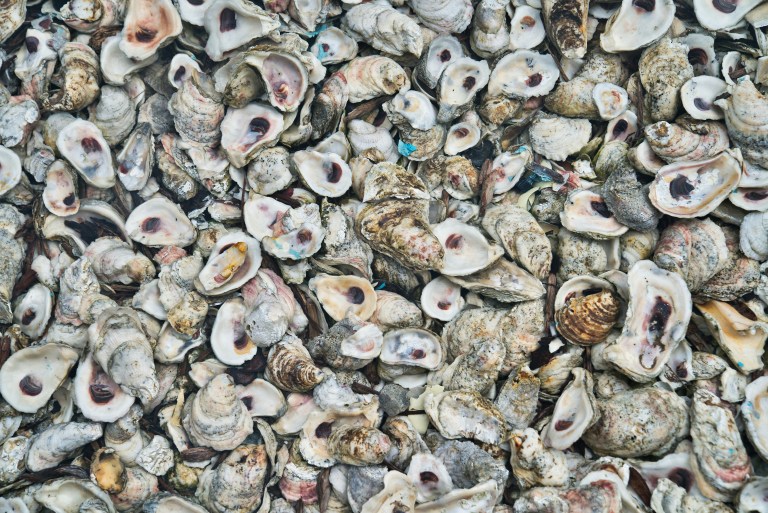
5 Benefits of Oyster Farming in Lough Foyle
As has been well documented in various media recently, we’ve seen significant growth in the oyster farming industry along the banks of Lough Foyle. While the majority of the coverage has been negative, it should be noted that oyster production in the area has positive aspects as well that are currently being ignored. Oyster farming in the Foyle has the potential to benefit the area instead of detracting from it, as popular opinion would have you believe. Outlined below are some of the ways in which oyster cultivation can enrich the community.
- Employment
The growth of oyster farms along Lough Foyle has created many jobs that wouldn’t have existed otherwise. Inishowen is an area with a high level of unemployment, with more than double the national rate of people claiming benefits. Jobs in this area are thin on the ground and it is not a region that is attractive to the industry given its remote setting and lack of well-developed infrastructure. It is up to local people to create their own employment, which is what oyster farmers have done, allowing them to remain in the area rather than having to move to find work elsewhere.
2. Economy
New business means new revenue. However, the towns and villages on the Donegal side of Lough Foyle have seen a steady decline in business, resulting in the closure of vital banks in the area. Oyster farming is new business and helps to bolster the local economy. Through the purchasing of supplies to build and maintain the farms, the use of services for machine maintenance and repair, not to mention allowing the families this industry supports to shop in the local businesses, oyster farmers have injected a little bit of money, and hope, back into the community.
3. Industry
The development of oyster farms along Lough Foyle has created a sustainable industry that did not exist before. For years, industry around us has been dying with our fishing fleet being hit hardest. What was once a renowned fish exporting community now just scrapes together a living. But the oyster farming industry is again bringing international connections to the Lough Foyle gaining us a reputation on mainland Europe and Asia as a leading oyster producing region in Ireland.
4. Environment
Oysters are filter feeders, meaning that they draw in water and trap particles in their gills to feed then release the filtered water. One oyster can filter up to 5L of water per hour. For this reason, the Billion Oyster Project was launched to repopulate New York Harbour with oysters to clean the water. The number of oysters currently in Lough Foyle has great filtering capabilities and, considering the Foyle is Class B water, the more we can do to improve it, the better.
5. Tourism
Oyster trestles, which are only visible for part of the day during low tide, attract the attention of many. Visitors to the area are curious to know what they are and to learn how local people earn their living. Rural employment has always been attractive to tourists around the world, from seaweed divers in Korea to vineyards in Spain – it is part of the cultural experience. Foyle oyster farmers have been approached by tourists from Germany, France, the UK, Ireland and beyond who stop to ask questions and take photos of the farms and farmers at work on the shore. People are interested in the new attraction oyster farms are providing.
No matter what side of the fence you sit on regarding oyster farming on the Foyle, there are some undeniable advantages to having them on our shores. However, legislation is necessary to regulate the expansion of farms and to ensure health and safety measures are in place to protect both the public and the farmers.
Share This:
Facebook
WhatsApp
Twitter
Email
Latest News
DIVE INTO OUR LATEST TIDINGS
Welcome to our 'Fresh Off the Boat' section, where we bring you the latest and greatest news just as it lands. Dive in with us and discover what's new, exciting, and happening right now
-
- Out of StockRead more

-
-